Why Do Workout Clothes Lose Elasticity 7 Tips?

Time:2026-10-30 Author:Amelia
0%

Workout leggings can feel supportive on Monday, then sag at the knees by Friday. Why do workout clothes lose their elasticity? The answer often involves repeated stretching, heat, friction, detergent residue, and fibers that gradually lose their ability to recover. Small habits matter. A hot dryer, a tightly packed gym bag, or rough contact with a zipper can all add strain over time.

Textile researcher Dr. Richard Blackburn’s work on sustainable materials offers a useful perspective on fabric life and care. I can’t verify a direct quotation from him on elastic workout wear, so I won’t present invented words as his. The practical principle is simple: fabric lasts longer when washing and drying place less stress on its fibers. Still, care instructions cannot reverse every kind of wear. Some garments will loosen, and that is worth admitting.

This guide explores seven practical tips: choosing cooler wash settings, using gentle detergent, skipping fabric softener when the care label advises it, air-drying, avoiding overloading, storing garments away from sharp edges, and replacing items when support noticeably fades. Look for real signs: a waistband that rolls, seams that pull, or fabric that stays stretched after you take it off. Not every loss of stretch comes from poor care. Fiber blend, garment fit, and frequent use also matter. The goal is not perfection. It is helping your workout clothes keep their shape for longer.
Why Do Workout Clothes Lose Elasticity 7 Tips?

What Gives Workout Clothes Their Stretch and Elasticity

Workout clothes get their stretch from elastic fibers, usually elastane, blended with nylon or polyester. Elastane can lengthen under tension and spring back when the tension eases. The fabric’s knitted loops also help it move with your body. That combination supports a squat, a reach, or a run without making the garment feel rigid. The exact feel varies with fiber content, knit structure, and garment construction, so two pairs can behave quite differently.

Tips: Check the care label, wash in cool water, and skip fabric softener if the label advises against it. Air-dry when practical. A hot dryer can gradually weaken elastic fibers, while sweat, body oils, and repeated stretching may also affect recovery. Small habits matter.

Elasticity does not vanish overnight in every garment. Often, a waistband first feels loose, or knees stay bagged after a workout. Age and frequent wear play a part, but care is not the whole story; fiber quality and construction matter too. I used to assume a quick tumble dry was harmless. That was too simple. When fabric no longer returns to shape, gentle washing may help preserve what remains, but it cannot restore worn-out elastic.

Why Workout Clothes Gradually Lose Elasticity

Why Do Workout Clothes Lose Elasticity 7 Tips?

Why Workout Clothes Gradually Lose Elasticity

Workout clothes stretch repeatedly at the knees, waist, and elbows. Their recovery depends on elastic fibers, fabric construction, and care. With wear, heat and friction can weaken elastane strands, while body oils and detergent residues may build up around them. The waistband may feel loose first. That is common.

Washing adds stress, especially when garments are exposed to hot water, high dryer heat, or rough loads. AATCC TM135 assesses dimensional change after laundering, including measurements after one, three, or five wash cycles. ASTM D4964 measures the stretch and recovery behavior of elastic fabrics. These standards offer useful test methods, not a guaranteed lifespan for every garment. Fabric blends and garment construction vary.

A practical check is to compare a garment’s stretch with its recovery: pull a small section gently, then see whether it returns smoothly. If it stays baggy, the elastic may be worn. Still, that test is imperfect; seams and knit structure can affect the result. Cooler washing and air-drying can reduce heat exposure, but they cannot restore damaged fibers. The cause is not always obvious.

How Washing, Heat, and Wear Damage Stretch Fibers

Workout clothes lose snap when elastane fibers face repeated strain, heat, and friction. Hot water and dryer temperatures can speed fiber aging, while twisting wet fabric stretches it unevenly. Sweat salts and detergent residue may also leave fabric stiff. Small damage accumulates.

Napper and Thompson’s 2016 washing-machine study reported that a synthetic garment load could release up to 700,000 fibers in one wash. That figure measures shedding, not elasticity loss, but it shows how much mechanical action fabrics endure. ASTM D4964 provides a standardized way to test stretch and recovery in elastic fabrics; it does not set one lifespan for every garment. Fabric construction and wear matter.

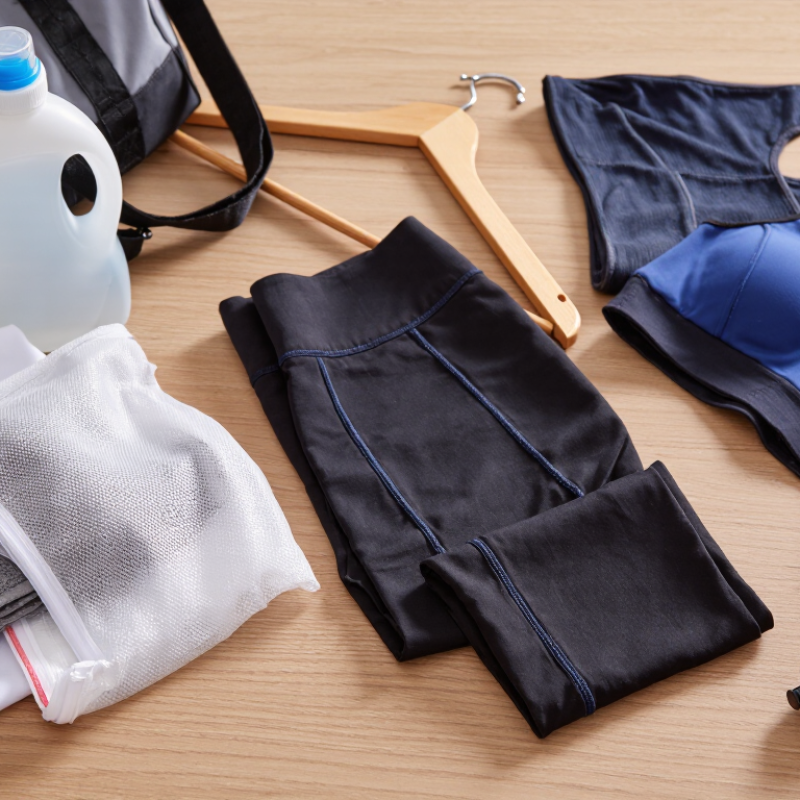
Turn leggings inside out. Use cool water. Choose a gentle cycle and mild detergent. Skip fabric softener if it leaves a coating. Place delicate pieces in a mesh bag. Avoid wringing; press water out with a towel. Air-dry flat or hang away from direct heat. A dryer is convenient, and I still use one sometimes—but repeated high heat is a trade-off. Check the care label, and notice when a waistband no longer springs back.

Seven Tips to Help Workout Clothes Keep Their Elasticity

Elastic fibers stretch during workouts, then need gentle care to recover. Wash clothes in cool water; hot water can weaken fibers over time. Choose a gentle cycle with a shorter spin. Turn garments inside out and place delicate pieces in a mesh laundry bag. This reduces rubbing against zippers and rough seams. Heat is the enemy.

Use a small amount of mild detergent, since excess soap can cling to stretchy fabric. Skip fabric softener, which may leave a coating that affects moisture-wicking performance. I used to think extra softener meant extra care. It didn’t. Check the care label, too; fabric blends can respond differently.

Air-dry workout clothes instead of using a tumble dryer. Lay leggings flat or hang them away from direct sunlight and heaters. Finally, rotate between several sets when possible, so each garment has time to dry fully and recover between wears. Small changes help. If elastic feels loose already, harsher washing is unlikely to restore it.

Why Do Workout Clothes Lose Elasticity? 7 Tips to Help Them Keep Their Stretch

Heat, harsh washing, and rough handling can wear down stretchy fibers over time. Use the care label as your guide and follow these practical habits.

Reading the chart: These are example maximum wash temperatures shown on garment care labels, not a recommended setting for every workout garment. Choose the temperature on your clothing’s care label; when in doubt, a cooler wash is gentler.

7 Tips to Help Workout Clothes Keep Their Elasticity

  1. Follow the garment’s care label.
  2. Wash in cool water on a gentle cycle when the label allows.
  3. Turn clothes inside out before washing.
  4. Use a mild detergent and avoid using more than needed.
  5. Skip fabric softener and bleach unless the care label says they are safe.
  6. Air-dry when possible, away from direct heat.
  7. Avoid ironing stretchy areas unless the care label permits it.

When to Replace Workout Clothes That Have Lost Their Stretch

Workout clothes should be replaced when their stretch no longer keeps them comfortably in place. If a waistband rolls down during a walk or leggings sag after a few squats, the fabric may have lost useful recovery. A simple check helps: gently stretch a panel, then release it. If it stays rippled or baggy, it may not support a secure fit. No need to overthink it.

Look for other clues, too. Thin spots that show skin when you bend, loose seams, and straps that keep slipping can mean a garment is past its best. For sports bras, replace one when the band rides up or the cups no longer stay put. Fit matters more than the item’s age; frequent washing and hard workouts can wear fabrics at different speeds. Check in bright light. Try a few movements. If you keep tugging the garment back into place, that is useful information. I used to judge by appearance alone, and that was not always right. A faded pair can still fit well, while newer clothes may already feel loose. Do not keep wearing a piece that distracts you from moving comfortably.

Why Do Workout Clothes Lose Elasticity? 7 Tips — When to Replace Workout Clothes That Have Lost Their Stretch

Tip Why Stretch Can Fade What to Do When to Replace
1. Follow the care label Fabric blends and garment construction differ, so a washing or drying method that suits one item may damage another. Check the garment’s care instructions before washing; use the stated temperature and drying method. Replace it if the fabric no longer provides secure, comfortable support after care instructions have been followed.
2. Use a gentle wash cycle Repeated vigorous washing can add friction and stress to elastic fibers and seams. Wash workout clothes with similar lightweight items on a gentle cycle. Fasten hooks and turn garments inside out when practical. Consider replacement if seams or elastic edges are visibly damaged or no longer stay in place.
3. Avoid excessive heat High heat from hot water, radiators, or a dryer can weaken elastic components over time. Use the temperature allowed by the care label. Air-dry when the label permits, away from direct high heat. Replace when waistbands, cuffs, or leg openings remain loose and do not recover their shape after washing and drying.
4. Choose detergent carefully Residue from too much detergent can build up in performance fabrics; fabric softener may coat fibers and affect moisture management. Use the recommended amount of a suitable detergent. Skip fabric softener unless the care label specifically allows it. Residue alone does not necessarily mean an item needs replacing. Reassess fit and support after washing it according to its care label.
5. Rinse out sweat and salt Sweat, body oils, and mineral deposits can remain in fabric if damp clothes are left bundled for long periods. After a workout, let garments air out or rinse them when convenient, then wash them before storing for an extended time. Replace if persistent odor remains after appropriate laundering or if fabric damage affects comfortable use.
6. Store clothes without stretching them Keeping elastic garments pulled tight around hangers or tightly packed for long periods may place unnecessary tension on the fabric. Store clean, dry items folded or hung in a way that does not stretch waistbands, straps, or cuffs. Replace if stretched areas stay distorted and the garment no longer fits securely during movement.
7. Check fit and function regularly Repeated wear, washing, friction, and time gradually affect the recovery of stretch fabrics; the rate varies by garment and use. Check for sagging, slipping, thinning, damaged seams, or areas that no longer spring back. Judge the garment by fit and function rather than a fixed age. Replace when it slips during exercise, no longer offers the support you need, has holes or failed seams, or causes uncomfortable chafing.

FAQS

Why do workout clothes lose elasticity over time?

Repeated stretching at the knees, waist, and elbows strains elastic fibers. Heat and friction can weaken them gradually.

Which area often feels loose first?

The waistband may lose its snap first. That is common, but not universal.

How does washing affect stretch?

Hot water, rough cycles, and twisting wet fabric add stress. Small damage builds over time.

Can a dryer make workout clothes baggy?

Repeated high heat may speed fiber aging. Air-drying reduces heat exposure, but cannot repair damaged fibers.

How can I check whether elasticity is worn?

Gently pull a small section, then release it. If it stays baggy, recovery may be weakening.

Is that stretch test reliable?

It is only a rough check. Seams and knit structure can affect the result, so I might misread it.

What washing routine can help preserve stretch?

Turn clothes inside out and use cool water, a gentle cycle, and mild detergent. A mesh bag can protect delicate pieces.

How should wet workout clothes be dried?

Press water out with a towel instead of wringing. Dry flat or hang away from direct heat.

Do sweat and detergent residue affect fabric?

Body oils, sweat salts, and detergent residue may collect around fibers. Fabric can feel stiff, though the cause is not always clear.

Do fiber-shedding figures prove elasticity loss?

No. One study reported up to 700,000 fibers released from a synthetic load in one wash. Shedding is not elasticity loss.

Conclusion

Workout clothes get their stretch from elastic fibers blended with fabrics such as nylon or polyester. Over time, these fibers can weaken from repeated movement, friction, sweat, and exposure to heat. This explains why do workout clothes lose their elasticity: frequent hot washes, harsh detergents, fabric softeners, high-heat drying, and rough handling can all strain the fibers and make garments feel loose or less supportive.

To help activewear keep its shape, wash it in cool water with a gentle detergent, turn it inside out, avoid fabric softener and bleach, and choose a delicate cycle. Air-dry garments when possible, keep them away from radiators and direct heat, and avoid leaving sweaty clothes damp for long periods. Rotating between several outfits can also reduce wear. When leggings, tops, or other workout clothes no longer fit securely, sag during movement, or have visibly stretched fabric, replacing them may be the most comfortable option.

Amelia

Amelia

Amelia is a seasoned marketing professional with a wealth of expertise in our company’s core offerings. With an unwavering passion for driving growth and innovation, she plays a pivotal role in shaping our marketing strategies and enhancing brand visibility. A key aspect of her responsibilities......