7 Best Ways to Unshrink a Merino Wool Sweater?

Time:2026-10-12 Author:Sophia
0%

A shrunken merino wool sweater can feel stiff, narrow, and almost beyond repair. I have seen sleeves lose several centimeters after one hot wash. The fabric often looks fuzzy around the cuffs, too. Yet merino fibers may relax when treated with patience, moisture, and gentle tension. Knowing how to unshrink a merino wool sweater starts with realistic expectations. Some garments recover well. Others remain smaller.

This guide presents seven practical methods for carefully reshaping merino wool. It considers lukewarm water, wool-safe conditioner, gentle soaking, towel pressing, and flat drying. Each approach aims to soften the fibers without adding heat or rough movement. Check the care label before trying anything. A sweater marked “dry clean only” may need professional advice. Test a hidden area first, because dyes and finishes can react differently. Small steps matter. Do not pull aggressively. Do not wring it.

The process can be slow, and results are not guaranteed. I would rather admit that than promise a perfect recovery. Measure the chest, sleeves, and length before treatment. Then compare those measurements as the sweater dries. Use a clean towel, a flat surface, and enough time for careful reshaping. Merino wool has natural elasticity, but repeated stretching can distort its knit structure. If the sweater develops a strange wave or uneven shoulder, pause and reassess. These seven methods offer practical starting points, not magic fixes. Nevertheless, a shrunken favorite may still regain useful shape and comfort.
7 Best Ways to Unshrink a Merino Wool Sweater?

Understanding Why Merino Wool Shrinks and Whether It Can Be Restored

7 Best Ways to Unshrink a Merino Wool Sweater?

Merino wool shrinks mainly because heat, moisture, and movement make its tiny fiber scales interlock. This process is called felting. A hot wash, rough spin cycle, or crowded machine can trigger it quickly. Merino fibers are fine, so the damage may appear as a shorter body, tighter sleeves, or a denser texture.

Restoration depends on the level of felting. If the sweater feels soft and only slightly smaller, try seven gentle methods: a cool-water soak, wool detergent, diluted conditioner, careful hand stretching, towel rolling, light steam blocking, or professional reblocking. Soak it for about 20 minutes, then press out water without twisting. Lay it flat and reshape it slowly, measuring against a similar garment. Steam can relax fibers, but keep the iron several centimeters away. Never pull hard.

Tips: Test a hidden area first. Use cool water. Avoid radiators and direct sunlight. A towel can support the sweater while it dries. If the fabric feels stiff, thick, or noticeably matted, complete recovery is unlikely. I have found that gentle reshaping sometimes improves length but not width. That limitation is easy to overlook. Future washing should use a wool cycle, minimal agitation, and flat drying.

Preparing the Sweater and Choosing a Safe Unshrinking Method

Before trying to unshrink a merino wool sweater, check its care label and inspect the fabric. Measure the chest, sleeves, and body length on a flat surface. Take a quick photo for comparison. Remove jewelry, clear a clean towel, and use a basin with lukewarm water. Hot water and sudden temperature changes can tighten wool fibers further.

The safest method is a gentle soak with wool-safe detergent. Let the sweater rest for 15 to 20 minutes without rubbing or twisting. A small amount of hair conditioner may soften fibers, but it is not a guaranteed treatment. I have found that patience works better than force. If the sweater feels dense, stiff, or felted, stretching may cause damage instead of recovery. Choose steam only when the fabric needs minor reshaping, and keep the steamer several centimeters away.

Lift the sweater with both hands and press out water carefully. Never wring it. Roll it inside a dry towel, then press gently to remove moisture. Lay it flat and ease each section toward the original measurements. Focus on the sleeves, shoulders, and side seams. Pin the edges only if the fabric stays stable. Let it dry naturally, away from direct heat. My first attempts were uneven because I pulled the neckline too hard. A slower, measured approach produces better control, though the original size may not return completely.

Seven Gentle Techniques for Reshaping a Merino Wool Sweater

Merino wool can often be reshaped after mild shrinkage, but fully felted fabric may not recover. Handle it patiently. I have found that rushing the process creates more distortion than shrinkage itself.

Begin with a lukewarm water soak for 20 minutes. This relaxes the wool fibers without shocking them. Add a small amount of gentle hair conditioner as a second technique. It can soften tight fibers, although too much may leave a slippery residue.

Press out water carefully. Never wring the sweater. Roll it inside a clean towel for the third technique, using light pressure to remove moisture.

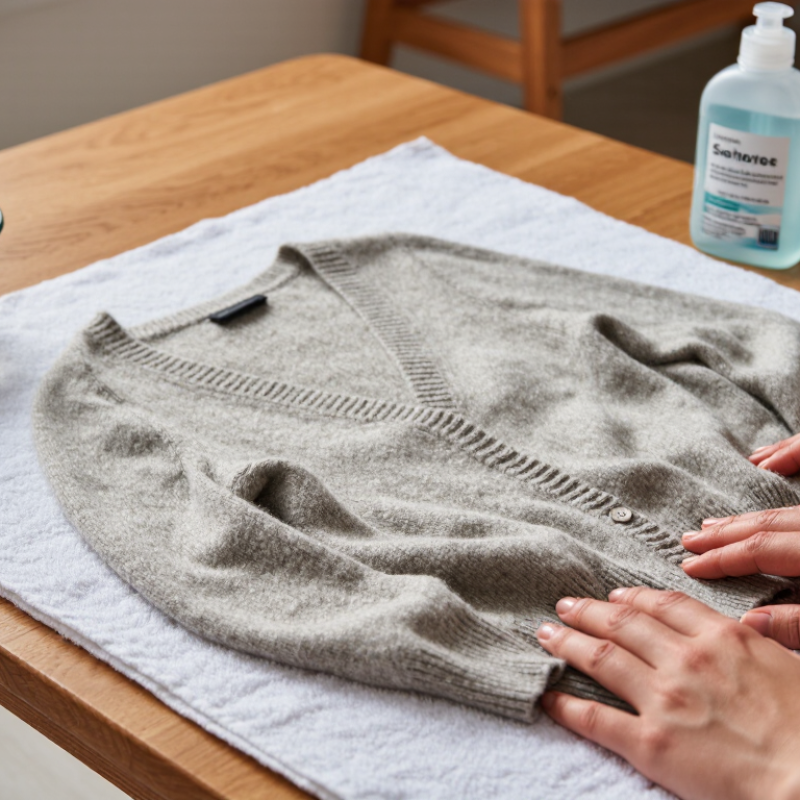
Lay the sweater flat on a dry towel. This fourth technique protects its shoulders and sleeves from stretching. Ease the body outward with your palms, matching the original proportions.

Use measuring tape for a fifth technique, checking the chest, length, and sleeve dimensions. Small adjustments are safer than forceful pulling. A short steam treatment offers a sixth option. Keep the steamer several centimeters away, then reshape the warm fabric gently. Do not press the iron directly onto merino wool.

For the seventh technique, pin the sweater’s edges to a blocking board or clean towel while it dries. Place pins evenly, not tightly. Let it dry completely, away from direct heat and sunlight. Check the shape halfway through. I sometimes overestimate how much stretching is needed, so I correct the measurements before the fibers set.

Step-by-Step Care During Stretching, Rinsing, and Drying

A shrunken merino wool sweater can sometimes be restored with patience, gentle moisture, and controlled stretching. Check the care label before touching it. Fill a basin with lukewarm water, then add a small amount of wool-safe cleanser. A mild hair conditioner may also soften tight fibers, but use very little. Soak the sweater for 20 to 30 minutes without rubbing or twisting. Agitation can create felting and permanent damage.

Lift the sweater with both hands, supporting its weight. Press out water gently, then place it on a clean towel. Roll the towel around it and press firmly. Do not wring. Lay the damp sweater flat and stretch it slowly from the shoulders, chest, sleeves, and hem. Work in small sections. Pin the edges to a dry towel or use a sweater-blocking mat. Measure against a similar garment if possible. I once pulled too hard near a cuff, and the shape became uneven.

Rinse with cool water until the cleanser disappears. Support the sweater during every transfer. Repeat the stretching process while it remains damp, especially around shortened sleeves and a tight body. Leave it flat in a ventilated room, away from radiators and direct sunlight. Turn it once after several hours. Never hang wet merino wool, because gravity can lengthen the shoulders. Results vary, and some shrinkage cannot be reversed. If the fabric feels dense, stiff, or fuzzy, stop stretching and consult a professional cleaner experienced with wool.

Preventing Future Shrinkage After Restoring the Sweater

Preventing future shrinkage begins immediately after restoring a merino wool sweater. Lay it flat on a clean, dry towel, then reshape the shoulders, sleeves, and hem by hand. Do not rush. Wool fibers can tighten again when exposed to heat, friction, or sudden temperature changes. Keep the sweater flat until it feels completely dry, even if the surface seems dry earlier.

Wash the sweater only when necessary. Use cool water and a mild detergent made for delicate wool fibers. Avoid hot water, aggressive rubbing, and twisting. These actions can cause renewed felting and distortion. Press out moisture gently, then roll the sweater inside a towel before reshaping it. A washing machine may be acceptable on a gentle wool cycle, but check the care label first. I once trusted a “delicate” setting without checking the temperature, and the sleeves became noticeably shorter.

Store the sweater folded on a shelf, not on a hanger. Hangers can stretch damp shoulders and create pointed bumps. Keep it away from radiators, heated dryers, and strong sunlight. If wrinkles appear, use light steam from a safe distance, then let the fabric rest flat. Measure the chest and sleeve length after restoration, and record those dimensions for future washing. This small habit reveals gradual shrinkage before the problem becomes difficult to correct.

7 Best Ways to Unshrink a Merino Wool Sweater

Recommended maximum water temperatures for restoring the sweater and preventing future shrinkage.

Use cool to lukewarm water, avoid sudden temperature changes, and reshape the sweater while it is damp. A conditioner or wool-safe detergent may help relax the fibers, while gentle steaming can support reshaping without aggressive handling. Dry the sweater flat and always follow the garment’s care label, especially when machine washing or using heat.

FAQS

Why does a merino wool sweater shrink?

Heat, moisture, and movement make its fine fibers interlock. This process is called felting. Hot washing can trigger it quickly.

Can a slightly shrunken sweater be restored?

Often, partly. Soft fabric may improve with gentle soaking and reshaping. Fully felted fabric rarely returns to its original size.

How should I prepare the sweater?

Check the care label first. Measure the chest, sleeves, and body length on a flat surface. Take a quick photo.

What is the safest unshrinking method?

Soak the sweater in lukewarm water for 15 to 20 minutes. Use a small amount of wool-safe detergent. Do not rub or twist.

Can hair conditioner help relax the fibers?

A small amount may soften tight fibers. It is not guaranteed. Too much can leave a slippery residue.

How can I remove water without damaging the sweater?

Press water out gently. Never wring it. Roll the sweater inside a clean towel, then apply light pressure.

How should I reshape the sweater?

Lay it flat on a dry towel. Ease the sleeves, shoulders, body, and side seams toward their original measurements. Use small adjustments.

Can steam help restore merino wool?

Light steam may relax minor distortion. Keep the steamer several centimeters away. Do not press an iron directly onto the fabric.

How do I dry the reshaped sweater?

Let it dry flat, away from radiators and direct sunlight. Use evenly spaced pins if the fabric remains stable. Check the shape halfway through.

What results should I realistically expect?

Length may improve more than width. Stiff, dense, or matted fabric may resist recovery. I sometimes stretch too much, so careful measuring matters.

Conclusion

Merino wool can shrink when heat, moisture, and friction cause its delicate fibers to tighten, but some garments may be carefully reshaped. This guide explains how to unshrink a merino wool sweater by first checking the care label, preparing a clean towel and basin, and choosing a gentle method. Seven possible techniques include soaking the sweater in lukewarm water, using a small amount of wool-safe cleanser, adding hair conditioner or mild soap, applying a diluted vinegar rinse, gently loosening fibers by hand, stretching the garment over a towel, and repeating the process gradually when necessary. Results may vary depending on the degree of shrinkage and the sweater’s construction.

During restoration, avoid twisting, rubbing, wringing, hot water, and sudden pulling. Press out excess water, reshape the sweater evenly, and let it dry flat while supported by a towel. Measure it periodically to maintain balanced proportions. Afterward, prevent future shrinkage by washing gently, using cool water, minimizing agitation, and always drying the sweater flat instead of using high heat or a tumble dryer.

Sophia

Sophia

Sophia is a dedicated marketing professional with an exceptional depth of knowledge about her company's products and services. With a keen understanding of market trends and customer needs, she crafts insightful blog posts that not only inform but also engage readers, enriching the company’s online......