What is the best clothing for hot humid weather? The answer depends on heat, activity, airflow, and personal comfort. Still, reliable guidance points toward lightweight, loose-fitting clothing that allows sweat evaporation and air movement. The U.S. National Weather Service explains that humidity reduces evaporation, making hot conditions feel more oppressive. At 90°F and 70% relative humidity, the heat index can reach about 105°F.
Research supports practical choices. The National Institute for Occupational Safety and Health recommends lightweight, breathable garments for hot work environments. ASHRAE Standard 55 also recognizes clothing insulation, air speed, humidity, and activity as major factors in thermal comfort. These findings explain why a loose linen shirt may feel cooler than a tight synthetic top during a humid afternoon. Open weaves, mesh panels, and moisture-managing fabrics can help. Dark colors may absorb more radiant heat, although fabric structure and airflow often matter more.
Professor George Havenith, a leading thermal physiology researcher at Loughborough University, has emphasized, “Clothing is the main barrier between the body and the environment.” That simple point deserves attention. Clothing can protect skin from sunlight, but it can also trap heat when poorly designed. No fabric wins every situation. Linen can wrinkle and cling when saturated. Some “cooling” synthetics lose comfort when airflow stops. The best choice is therefore not a single material, but a thoughtful combination of fit, breathability, shade, and sweat management. This guide examines those details through evidence, real-world experience, and a little healthy skepticism.
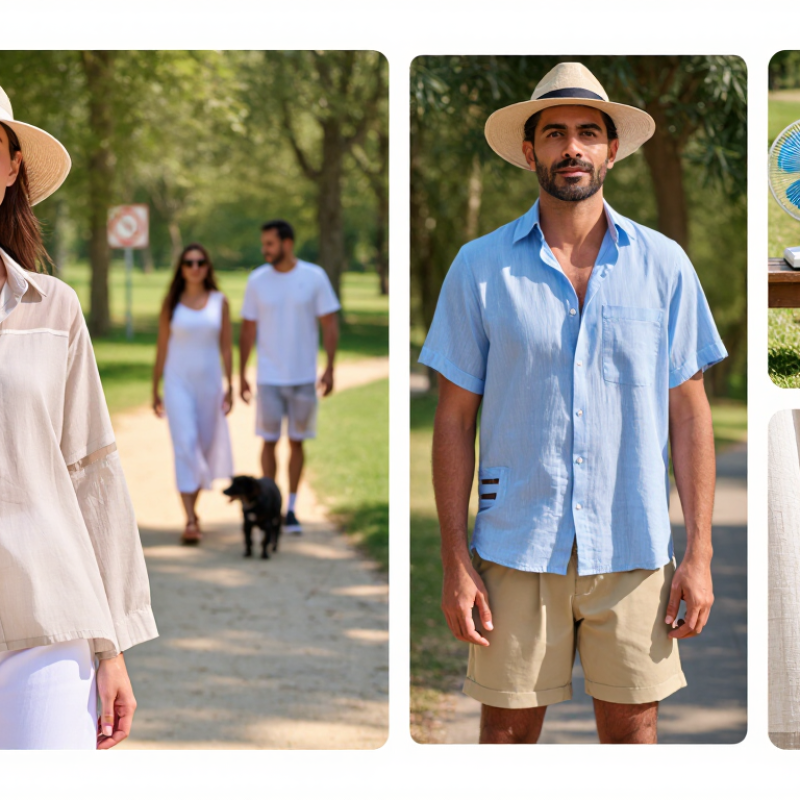
Hot, humid weather changes how clothing feels and performs. High humidity slows sweat evaporation, so skin can remain damp for hours. This creates a sticky layer between the body and fabric. Tight clothing often traps heat around the chest, waist, and underarms. Loose, lightweight garments allow more air movement. That airflow matters more than simply choosing the thinnest material.
Natural fibers can feel comfortable, especially when they are loosely woven. Breathable cotton absorbs moisture, but it may stay wet after heavy sweating. Linen dries faster in many situations, although it can wrinkle easily. I once chose a thick cotton shirt because it felt soft indoors. Outside, it became heavy and uncomfortable within minutes. My choice looked practical, but it ignored humidity.
Color, construction, and fit deserve equal attention. Pale colors generally absorb less sunlight than dark colors. Open collars and short sleeves can release heat around the neck and arms. Mesh panels may improve ventilation, but they can expose skin to stronger sunlight. A hat with a broad brim helps protect the face and neck. Sandals may feel cooler, yet secure straps are safer on wet surfaces. I still sometimes dress for temperature alone. That habit needs reconsidering. The best outfit depends on shade, activity, sweat level, and access to dry clothing. Natural fabrics can help. Good airflow helps more.
| Clothing Factor | Recommended Choice | Why It Helps in Hot, Humid Weather | Potential Limitation | Suitability |
|---|---|---|---|---|
| Fabric weight | Lightweight or medium-lightweight fabrics | Reduce insulation and usually allow heat to escape more easily than heavy fabrics. | Very thin fabrics may offer less durability, coverage, and sun protection. | Excellent |
| Fabric construction | Loosely woven or breathable construction | Creates more air movement around the skin and can reduce the feeling of being trapped in damp clothing. | Open weaves can be more transparent and may provide less protection from direct sunlight. | Excellent |
| Fit | Relaxed, not tight | Leaves space for airflow and limits fabric sticking directly to sweaty skin. | An excessively loose garment may snag or feel less practical during active movement. | Excellent |
| Linen | Lightweight linen shirts, trousers, or dresses | Often feels airy because it is breathable and commonly made in lightweight, open constructions. | Wrinkles readily and can feel damp after absorbing perspiration. | Excellent |
| Cotton | Lightweight cotton with a loose weave | Generally breathable and comfortable for casual, low-to-moderate activity. | Absorbs moisture and dries slowly, so it may remain wet during heavy sweating. | Good |
| Moisture-management synthetics | Lightweight polyester or nylon designed to move moisture | Can spread perspiration across the fabric surface and usually dry faster than cotton. | Some tightly constructed or dark synthetic garments may feel warm without adequate ventilation; odor retention can also occur. | Excellent for activity |
| Merino wool | Very lightweight, fine-gauge merino layers | Fine fibers can manage moisture and odor better than many conventional fabrics for some users. | May feel less airy than linen and can be more expensive or delicate. | Good |
| Color | Light or medium colors | Usually absorb less visible sunlight than dark colors, which can help reduce solar heat gain. | Color alone does not determine comfort; fabric thickness, weave, and airflow also matter. | Very good |
| Sun protection | Lightweight, tightly woven coverage or clothing with a tested UPF rating | Covers more skin and can reduce ultraviolet exposure while maintaining ventilation. | UPF varies with weave, color, stretch, wetness, and garment condition; no clothing replaces shade and sunscreen on exposed skin. | Excellent |
| Design details | Short sleeves, vented panels, breathable footwear, and moisture-managing socks | Increase airflow and help reduce moisture accumulation in high-sweat areas. | More exposed skin can increase sun exposure and insect-bite risk; balance ventilation with appropriate coverage. | Excellent |
Choose loose, lightweight clothing with a breathable weave. Space between fabric and skin helps air circulate. Keep it airy.
Lightweight cotton, linen, and moisture-managing blends can work well. Open weaves often matter more than extreme thinness. Thin is not always better.
Hold the fabric near a window. If light passes through, air may move more easily. This test is imperfect.
Loose clothing usually reduces damp contact around the waist, armpits, and knees. Avoid tight cuffs and waistbands. They trap warmth.
Select a loose shirt with an open weave and relaxed trousers. Light colors may reduce solar heat. A ventilated hat can shade your face.
Choose clothing that moves moisture away without trapping sweat. Mesh panels, short sleeves, and split hems improve airflow. Carry a spare shirt.
Heavy cotton absorbs sweat and dries slowly. It may feel comfortable briefly, then become wet and heavy. I sometimes underestimate this problem.
Wear a moisture-managing base layer under a thin overshirt. You can adjust between outdoor heat and strong indoor cooling. Layers need flexibility.
Quick-drying fabric and secure sleeves are practical near water. For outdoor work, allow movement without excessive loose fabric. Extra fabric can snag.
Sit, reach, and raise your arms while testing the garment. It should feel airy without becoming revealing or careless. Comfort varies.
Understanding what is the best clothing for hot humid weather starts with choosing comfort, airflow, and moisture control. Breathable fabrics such as linen, cotton, and moisture-wicking blends can help sweat evaporate while reducing the sticky feeling caused by humidity. Loose, lightweight shirts, shorts, skirts, and trousers allow air to circulate around the body more effectively than tight or heavy garments. Light colors may reflect more sunlight, while simple layers can provide flexibility when moving between hot outdoor areas and cooler indoor spaces.
Clothing choices should also match the activity. For walking or sightseeing, airy garments, a wide-brimmed hat, and sunglasses can help limit sun exposure. During exercise, quick-drying materials and supportive but nonrestrictive designs are useful. For work or social occasions, relaxed silhouettes made from breathable fabrics can maintain a neat appearance without trapping excess heat. The goal is to stay cool, dry, protected, and comfortable throughout the day.

 Jedia Clothing